
In the context of homemade raw cat food recipe, "natural" refers to creating a diet that mirrors what a cat would consume in the wild — primarily whole prey. This means using whole cuts of meat, including muscle meat, organs, skin, and bones, to provide nutrients in their natural form. While supplements can play a crucial role in ensuring nutritional completeness, the goal of a natural recipe is to source as many nutrients as possible directly from whole food ingredients.
The Raw Feeding Decision
A key reason many pet parents choose a raw, natural diet is to preserve heat-sensitive nutrients.
Taurine, an essential amino acid for cats, is particularly vulnerable to degradation through high-heat cooking. Other vitamins and amino acids can also be diminished. While it is possible to create a nutritionally complete cooked diet, it requires careful supplementation with synthetic taurine and other nutrients added after cooking to ensure potency. A well-prepared raw diet aims to provide these nutrients directly from the food itself.1
Are you ready to make your own homemade raw cat food? Let's get started!
Essential Whole-Prey Homemade Recipe
This recipe is designed to mimic the nutritional profile of a cat's natural prey.
Yields: Approximately 12 lbs of food
Daily Feed Amount: Typically 2-3% of your Maine Coon's age-appropriate body weight per day. Maine coon kitten meal/body weight ratios and proportions are different during their active growth phase.
The Ratio You'll Actually Use (And Why 80-10-10 Isn't It)
Open ten cat food recipes and you'll meet the same sacred cow in nine of them: 80-10-10. Eighty percent meat, ten percent bone, ten percent organ. It's recited with the reverence of a religious creed, and it is — for the home kitchen — a beautiful piece of fiction.
Here's the problem. The 80-10-10 ratio assumes dry bone. In the real world, bone doesn't arrive naked. When you buy chicken quarters, that "bone" is wrapped in skin, tendon, and flesh. It has marrow inside. It has fluids. It is, in short, not a clean mathematical variable — it's a wet, messy, living thing that refuses to be weighed as an abstraction.
So we're retiring the sacred cow. Instead, engrave this in your mind:
10 — 1 — 5
10 lb meat (bones & skin included) — 1 lb organs (½ lb liver + ½ lb other organs) — 5 eggs
That's it. Ten, one, five. Your Walmart chicken leg quarter bag is already ten pounds — the universe has done the measuring for you. One pound of organs, split down the middle: half liver (don't let liver take over the whole pound), half everything else (hearts, gizzards, kidney). Five eggs. You can weigh this on a kitchen scale. You can buy it at the butcher. You don't need a chemistry degree or a spreadsheet.
Say it out loud. Tape it to the fridge. It will serve you better than any ratio that requires you to first define what "dry bone" means at sea level.
A word of warning before you scroll down: the supplements below are dosed for three times this recipe — thirty pounds of meat, not ten. That sounds insane. It isn't. The reason is coming in a moment, and it's a good one.
Ingredients:
- 10 Lb Small animal meat: fresh chicken, turkey, or rabbit, including bones and skin.2
- 1 Lb Organ meat: Liver (chicken, beef, pork). (Note: Liver should be about half of the organ mix.) Kidney (pork or beef). Chicken gizzards, hearts.
- 5 Whole eggs (without shell if you are using bones).3
Optional Supplements*:
* Important: The amounts below are for 30 pounds of meat — not the 10 pounds in the recipe above. Yes, that's three batches. No, you are not losing your mind.
Why? Because supplement makers have a cruel sense of humor. They sell vitamin E as 400 IU capsules, and 400 IU is what one batch needs — except it's not. Your 10-pound batch needs about a third of that. So your choices are: (a) crack open a capsule, eyeball one-third of the oil, and save the rest, or (b) make three batches and use whole capsules like a civilized person.
Option (a) means storing a half-drained capsule of sticky oil in your fridge, where it will slowly oxidize, leak onto the shelf, and mock you every time you open the door. Option (b) means 30 pounds of meat and a freezer that now belongs to your cat.
We recommend (b). Multiply the recipe by three, buy whole capsules, and stop pretending you can divide 400 IU into three equal parts without a laboratory and a steady hand.
- 2,000–2,500 mg Wild Salmon Oil, Sardine Oil, or Pollock Oil. Liquid form is easiest. (Follow product label mg/dosage.)
- 200–400 IU Natural Vitamin E Oil (D-alpha tocopherol). Liquid form is easiest. (Check the label; often 1 capsule is 400 IU.)
- ~½ teaspoon Kelp Powder (or Potassium Iodide drops). (Follow label dose per pound of food.) — for iodine.
- ½–1 teaspoon Green-Lipped Mussel Powder (or a small piece of beef kidney) — a natural source of essential manganese.
Practical Implementation: "The Mixing Method"
This is the most efficient way to ensure even distribution.
- Prepare Your Batch: Grind your 10 pounds of meat/bone and 1 pound of organ mix. We precut the bones to fit into the grinder.
- For boneless recipe, use 6 teaspoons of eggshell powder. See the preparation guide below.
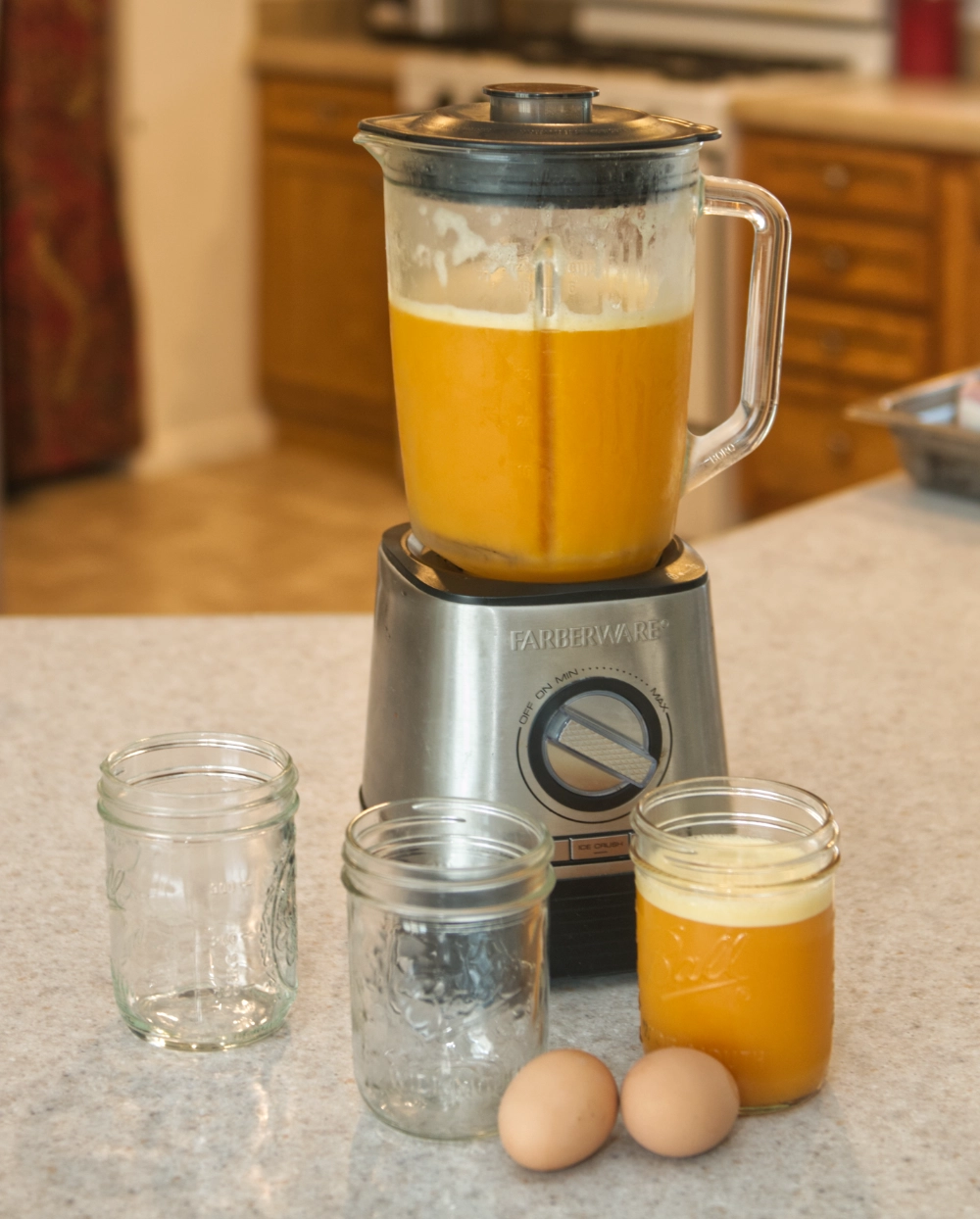
- Combine eggs with optional supplements in a blender and run for 1-2 minutes on slow speed.
- Pour the egg and supplement mixture over the ground meat/bone/skin and organ mixture in your large mixing bowl.
- Mix Vigorously: Use your (very clean or gloved) hands or a sturdy spoon to mix the entire batch extremely thoroughly for several minutes. You want every single portion to have a tiny, equal bit of each supplement.
- Portion and Freeze: Weigh out portions and freeze them.
How to Prepare Eggshell Powder?
Collect & Clean: Save eggshells. Rinse them thoroughly to remove any egg white.
Dry: Bake them on a tray at 200°F (95°C) for about 10 minutes to ensure they are completely dry and sanitized, or let them air-dry completely.
Grind: Pulverize the dried shells in a clean coffee grinder, blender, or mortar and pestle until they form a very fine powder with no sharp pieces.
Store: Keep the powder in an airtight container.
Important Note: While this is a standard guideline, the exact calcium content can vary slightly. For long-term feeding, consulting a veterinarian or pet nutritionist is recommended to ensure perfect balance.
In summary: For every pound of boneless meat in your recipe, add ½ teaspoon of finely powdered eggshell.
Example Meats and Demonstration of our Today's Recipe
We make large batches of cat food for our cattery and our clients.
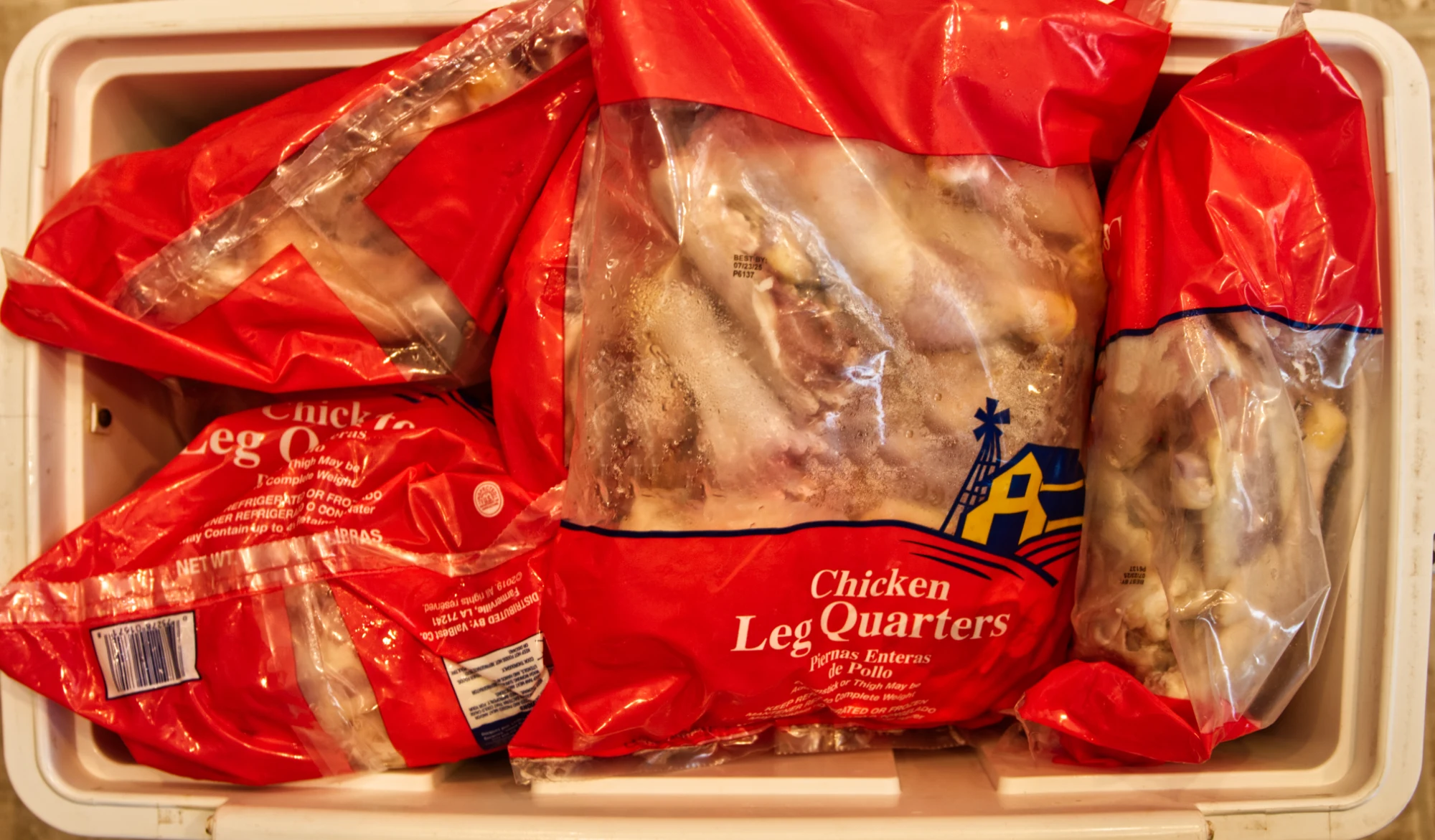
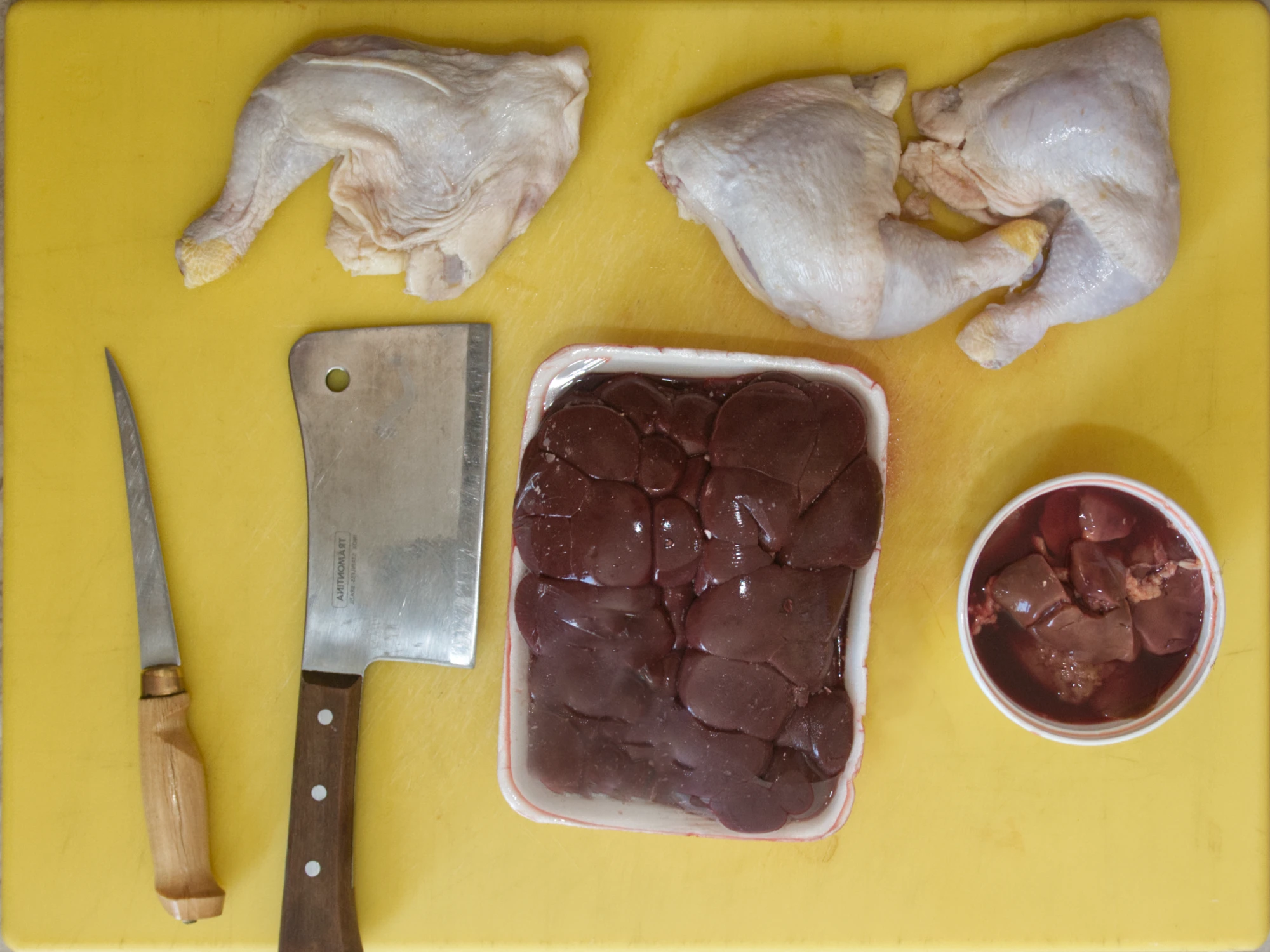
The large cleaver is used to cut through the bones into about two-inch pieces to fit into the grinder. We use chicken leg quarters with skin and bone, beef kidney, and chicken livers.
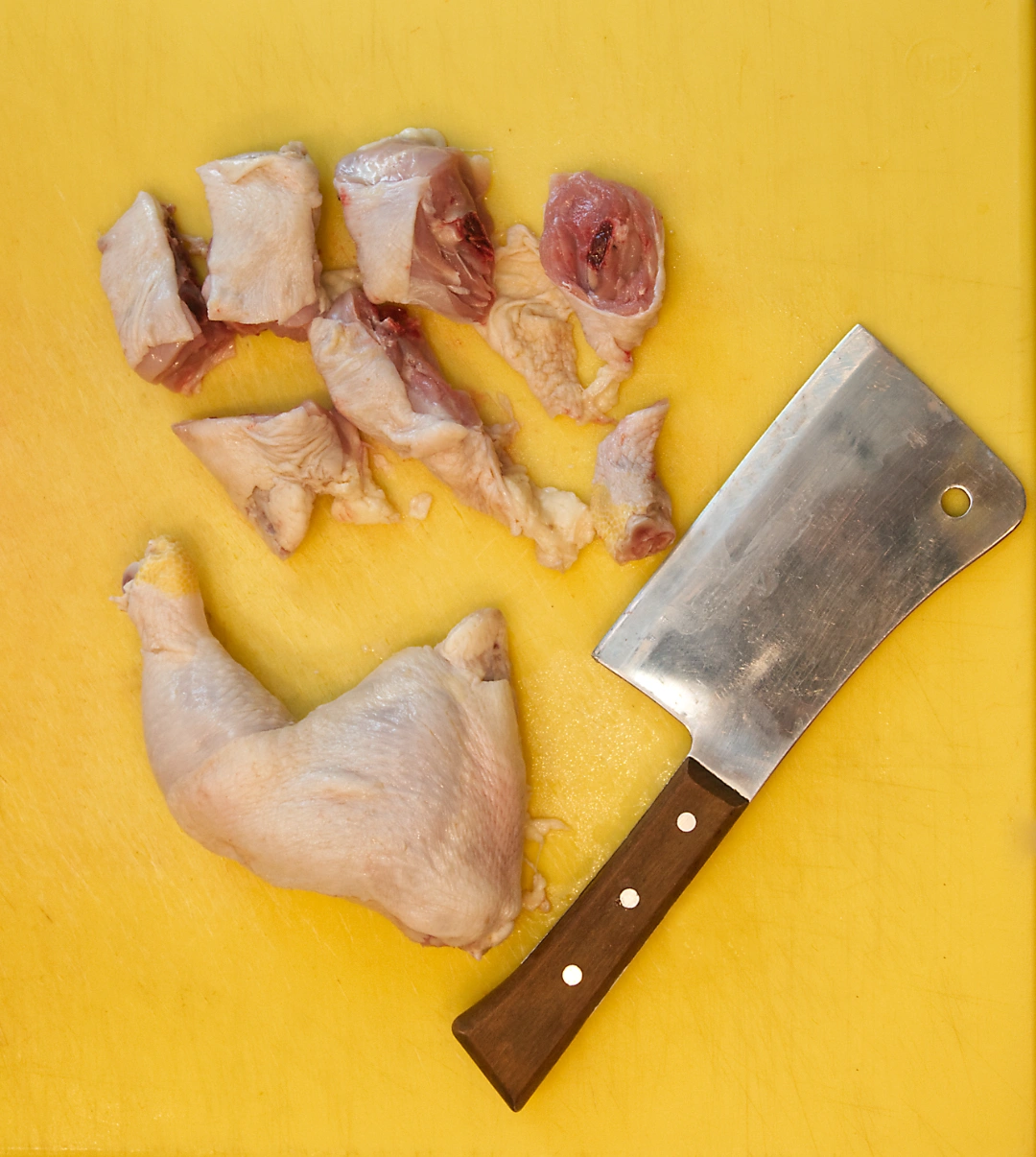
Precut pieces before grinding.
Video demonstrating our grinding process of the chicken leg quarters with the bones included.
Egg Mixture with Supplements
Below is prepared egg mixture (without shells) with the supplement slurry mixed in it.
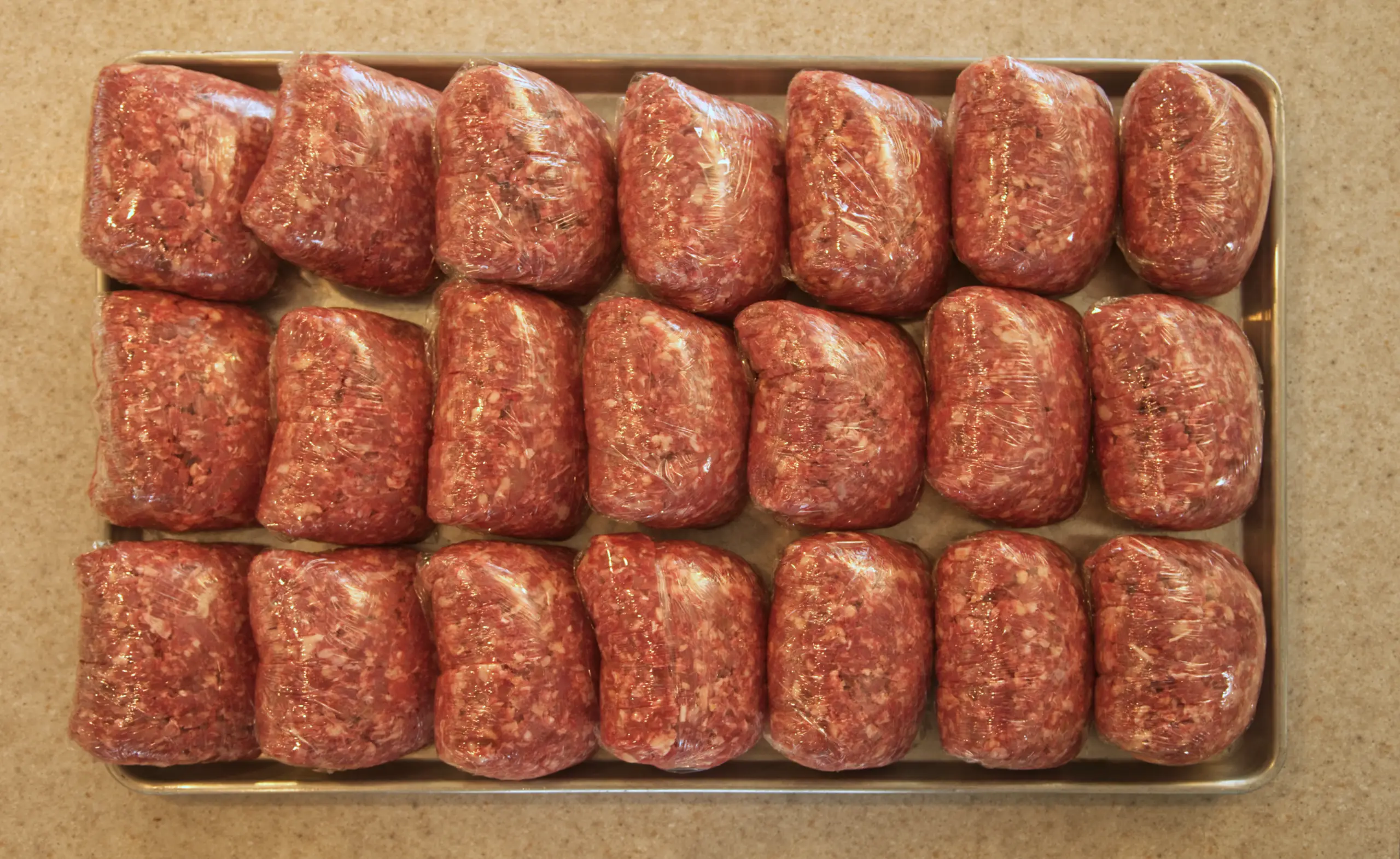
And finally, our packaged homemade raw cat food. We make our packages between 24 and 25 ounces. For one cat, each package will be used in 3-4 days depending on sex, age, growing or not, activity level, and their mood. It's ok if your package stays in the fridge for a few days.
Optional:
| Nutrient | Why It's Needed | How to Supplement | Amount |
|---|---|---|---|
| B Vitamins Complex | Water-soluble vitamins that can be lost when meat is frozen or thawed, or if your cat has digestive issues. A boost ensures adequacy. | Nutritional Yeast (sprinkled on top) or a B-Complex liquid. | Follow label dose. |
| Taurine | Although your recipe is rich in taurine (hearts, dark meat), adding a little extra is cheap insurance. It's water-soluble, so excess is harmlessly excreted. | Pure Taurine Powder. | 500–1000 mg per batch. |
Why This Combination Works:
Using meat with bones and skin provides a holistic nutritional package. The dark meat, skin, and bones offer a complex matrix of nutrients that boneless, skinless breast meat alone cannot:
- Dark Meat & Skin: Provides essential fatty acids and a broader amino acid profile.
- Bones: Are a natural source of calcium, phosphorus, and other minerals like magnesium. The grinding process makes them safe for consumption.
- Organs: Are nutrient powerhouses, dense in vitamins and essential amino acids like taurine.
- Eggs: Are a fantastic source of protein, fats, and vitamins. Make sure to use both egg yolk and the crushed shell is an excellent source of additional calcium.
The Essential Nutrients & Their Natural Sources
Cats are obligate carnivores, meaning they have a biological requirement for nutrients found primarily in animal tissue.
| Nutrient | Why Cats Need It | Natural Source |
|---|---|---|
| Protein and Amino Acids | ||
| Taurine | Essential for vision, heart function, and reproduction. A deficiency can be fatal. | Dark meat (heart is especially rich), liver, fish, shellfish. |
| Arginine | Critical for removing ammonia from the body. | Muscle meat, fish, eggs. |
| Fats & Fatty Acids | ||
| Arachidonic Acid | An essential fatty acid for skin, coat, and kidney health. | Animal fats, organs, eggs. |
| Omega-3 & Omega-6 | Reduce inflammation, support brain health and skin/coat condition. | Fish oil (e.g., salmon oil), egg yolks, skin and fat of poultry. |
| Vitamins | ||
| Vitamin A | Essential for vision, growth, and immune function. Cats cannot convert beta-carotene from plants. | Liver, egg yolks. |
| Vitamin D | Regulates calcium and phosphorus for bone health. | Liver, egg yolks, fish oil, sunlight exposure. |
| Vitamin E | A crucial antioxidant that balances the high fat content in a raw diet. | Egg yolks, leafy greens (in tiny amounts), wheat germ oil (often used as a supplement). |
| Minerals | ||
| Calcium & Phosphorus | Must be present in a specific ratio (~1.2:1). Vital for bone health, nerve function, and blood clotting. | Ground bones (the perfect natural source), eggshell powder. |
| Magnesium, Potassium, Sodium | Support nerve function, hydration, and enzyme processes. | Muscle meat, heart, bones. |
| Manganese | Essential for bone development, metabolism, antioxidant function, and the formation of cartilage. | Blue Mussel / Green-Lipped mussel, beef kidney, shellfish. |
Do I need to add fish or canned sardines?
Short Answer: In small amounts as an occasional treat or supplement, yes. As a regular staple in the main recipe, it is not recommended.
Detailed Explanation:
Pros: Fish (especially oily fish like sardines, salmon, mackerel) is an excellent source of Omega-3 fatty acids (EPA/DHA) and natural vitamins.
Cons:
Thiaminase: Many raw fish (e.g., herring, smelt, anchovies) contain an enzyme called thiaminase that destroys Vitamin B1 (Thiamine). A deficiency can lead to severe neurological problems. Cooking destroys this enzyme, which is why it's not an issue in canned fish.
Heavy Metals: Predatory fish higher on the food chain (like tuna) can accumulate heavy metals like mercury.
Unbalanced: Fish is not nutritionally complete on its own and should not replace land animals in the diet.
Addiction: Some cats can become addicted to the strong taste of fish and refuse other foods.
Recommendation:
Canned Sardines: A better option. The canning process cooks the fish, destroying thiaminase. Choose sardines packed in water with no salt added. They can be a wonderful weekly supplement for Omega-3s.
Raw Fish: Should be avoided or used extremely sparingly. If you do, it should be a very small portion of the overall diet and not a regular ingredient.
A Better Alternative: To get the benefits of fish without the risks, consider adding a purified fish oil supplement (like salmon oil) directly to the food. This provides a controlled dose of EPA/DHA without thiaminase or heavy metal concerns.
What are the natural sources of manganese?
Manganese is a trace mineral that can be low in homemade diets relying solely on muscle meat and liver.
Why it's important: Manganese is essential for bone development, metabolism, antioxidant function, and the formation of cartilage.
Natural Food Sources for Cats:
Blue Mussel / Green-Lipped Mussel: This is one of the richest and most bioavailable animal-based sources of manganese. It is often available powdered as a supplement for pets.
Organ Meats: Specifically, beef kidney and shellfish (like oysters, clams) contain higher levels of manganese than muscle meat or liver.
Leafy Greens (in tiny amounts): While cats are carnivores, minute amounts of pureed spinach or kale can contribute manganese. However, this should be a very small part of the overall diet.
Seeds & Nuts (Not Recommended): While these are high in manganese for humans, they are not appropriate for cats due to their high phytic acid content (which blocks mineral absorption) and high fat content.
Recommendation: The most practical and species-appropriate way to ensure sufficient manganese is to include a small amount of green-lipped mussel powder or other organ meats like kidney in your recipe rotation. This acts as a natural supplement to cover this potential nutritional gap.
Disclaimer: This information is based on nutritional guidelines and research. If you cat has different needs, you may need to consult a veterinary nutritionist to formulate a diet specific to your cat's needs.
Important Final Steps & Considerations
- Supplementation is Often Still Needed: Even the best whole-prey recipe can have gaps. Most recipes require:
- Vitamin E: To balance the fats.
- Omega-3s: Often added via fish oil for an optimal fatty acid ratio.
- Iodine: Not sufficiently present in land animals. Often supplemented with kelp or an iodine supplement.
- Manganese: Can be low in some meats; may need supplementation.
- Food Safety: Handle raw meat with care. Use clean surfaces, utensils, and practice good hygiene. Some owners choose to briefly freeze meat beforehand to reduce potential pathogens. We freeze all our food and thaw it before serving to ensure safety. It makes me feel better too.
- Transition Slowly: Introduce the new food gradually over 7-10 days, mixing it with your cat's current food to avoid digestive upset.
Watch the Video: Our Healthy and Happy Maine Coons Eating Homemade Raw Food
Raw Cat Food is Safe for Cats:
- Elaboration on Raw Food Safety
Based on our extensive positive experience with raw cat food in multiple countries proves the benefits of raw feeding when done correctly. Let's consider the feline biology:
Carnivorous Physiology: Cats have a shorter, more acidic digestive tract (pH of <1.5 when fasting, compared to a human's pH of 4-5) that is designed to process bacteria found in raw prey quickly, before it can colonize and cause illness.
Foregut Fermentation: Unlike ruminants, cats are not designed for significant foregut fermentation. Their primary digestive defense is gastric acidity and rapid transit time.
However, the safety concern from organizations like the FDA and AVMA is multifaceted and extends beyond the cat's health:
Zoonotic Risk (Risk to Humans): This is the primary concern. Pathogens like Salmonella and E. coli in raw meat may not make a healthy cat sick, but they can be shed in the cat's feces. This poses a significant risk to humans in the household, especially the immunocompromised, elderly, and young children during litter box cleaning or through casual contact with the pet.
Variable Individual Health: Not all cats are healthy adults. Kittens, seniors, or cats with compromised immune systems (e.g., from FIV, FeLV, or cancer) may be more susceptible to pathogens.
Source of Meat Matters: While USDA-inspected meat for human consumption has very low pathogen levels, it is not sterile. The "FDA compliant" label means it meets a certain safety threshold for handling and cooking, not for consumption raw by a sensitive species. The risk, though low, is not zero.
Conclusion: Our practice demonstrates that the risk to the cat can be managed effectively. However, we must also inform readers of the potential zoonotic risks and the importance of impeccable hygiene (washing hands, utensils, and surfaces thoroughly) to protect their human family members. - Introduce Slowly
As with any new protein, introduce new ingredient gradually into your cat's diet. Start by replacing a small amount of the old protein with new and slowly increase over a week. This allows their digestive system to adjust and helps you monitor for any food sensitivities. - Clarification on Calcium and Phosphorous from bones and egg shells:
The goal is to maintain a calcium-to-phosphorus (Ca:P) ratio of approximately 1.2:1. This balance is critical for bone health, nerve function, and preventing health issues, such as the development of urinary crystals and potential long-term organ complications.
Muscle Meat: Is very high in phosphorus and very low in calcium.
Bone: Is rich in calcium and also contains phosphorus.
Organs: Have a more balanced but leaning towards phosphorus.
When you grind whole chicken quarters (which include meat, skin, and bone), you are creating a natural balance. The bone provides the necessary calcium to offset the high phosphorus levels in the muscle meat. Adding powdered eggshell, which is almost pure calcium carbonate, would disrupt this balance by skewing the ratio heavily towards calcium, potentially leading to hypercalcemia over time.
Recommendation: Omit the eggshells from the recipe when using bone-in meat. The ground bone is sufficient. If you were ever to use a boneless meat source, you would then need to add a calcium source like eggshell powder at a specific ratio (approximately ½ teaspoon per pound of boneless meat)
Grinder Required: A standard kitchen grinder often struggles with bone. Use a heavy-duty model to grind bone directly. If unavailable, supplement calcium with eggshell powder.
Research References
- National Research Council (NRC). 2006. Nutrient Requirements of Dogs and Cats. Washington, DC: The National Academies Press. This is the scientific gold standard for companion animal nutrition.↩
- American Association of Feed Control Officials (AAFCO). AAFCO Dog and Cat Food Nutrient Profiles. This provides the practical nutritional standards that commercial pet foods must meet.↩
- Waltham Petcare Science Institute. Extensive research on pet nutrition, including studies on taurine and raw diets. https://www.waltham.com/↩
- Small Animal Clinical Nutrition, 5th Edition (2010). Hand, Thatcher, Remillard, Roudebush, Novotny. A key textbook used by veterinary nutritionists.
- Catinfo.org. Lisa A. Pierson, DVM. https://catinfo.org/making-cat-food/#boneless_poultry_meat (2025 Edition)
Disclaimer: This blog post is for informational purposes only. It is not a substitute for professional veterinary advice. Formulating a complete and balanced diet for a cat is complex. We strongly recommend working with a veterinarian or a board-certified veterinary nutritionist to ensure any homemade diet meets all of your individual cat's health needs.